What is context engineering for AI agents?
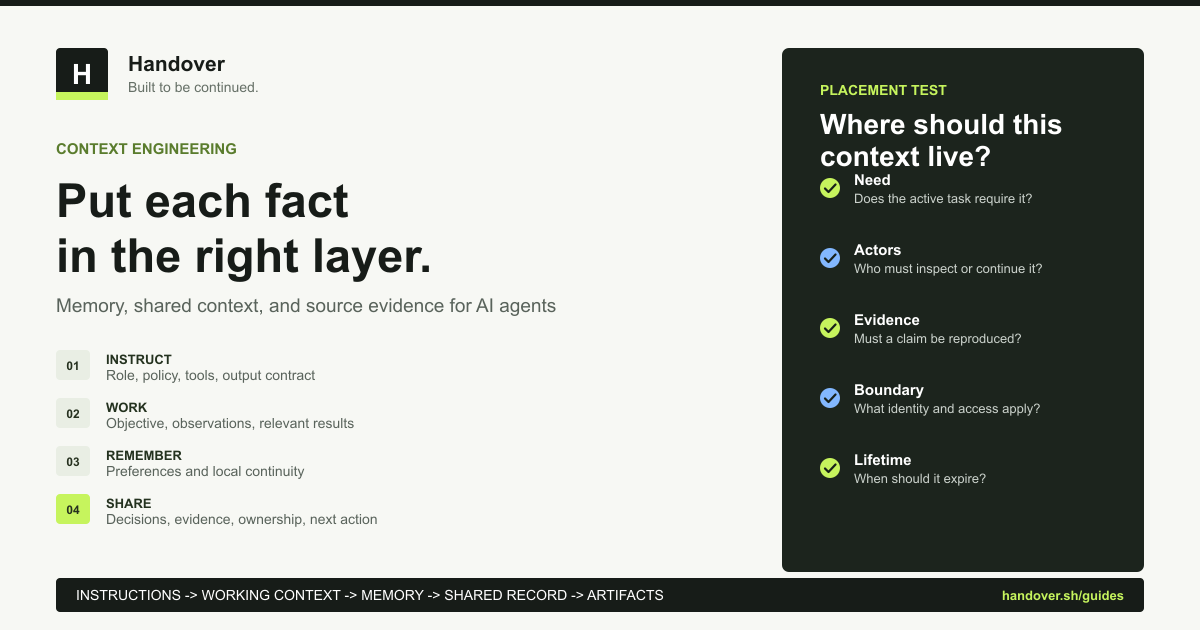
Context engineering is the deliberate design of what information reaches an AI agent, when it arrives, how it is structured, and where it persists. The goal is not to maximize tokens. It is to give the model the smallest trustworthy context that supports the next decision while keeping durable state and evidence available outside the active context window.
- Instructions define the role, constraints, tools, and output contract.
- Working context contains the current objective, recent observations, and relevant tool results.
- Runtime memory recalls preferences or facts useful to the same application across turns or sessions.
- Shared context preserves accountable work that another person, model, or tool must inspect and continue.
- Source artifacts preserve the files, data, and evidence behind summaries and decisions.
What is agent memory?
Agent memory is information retained by an agent runtime across turns or sessions. It can improve local continuity by recalling preferences, prior interactions, entities, or thread state. Its visibility, lifecycle, authorship, and portability still depend on the runtime and storage system that own it.
How should teams secure context used by AI agents?
Apply authorization before search, retrieval, and publication. Each person should use an interactive identity and each unattended agent should use a named, scoped service identity. The server should derive company, workspace, role, and authorship from the accepted credential, keep private records tenant-isolated, and require an explicit publication action before anything becomes public.
How do you test a context engineering workflow?
Test continuity with two separately authenticated actors and no shared chat. The first actor publishes a uniquely marked record with an attached source file and reads it back. The second receives only the stable link or search marker, retrieves the exact revision and artifact, reproduces one material fact, and appends a new revision using the current revision ID. Also test a denied identity and a stale write so continuity does not weaken access control or overwrite protection.
Primary references